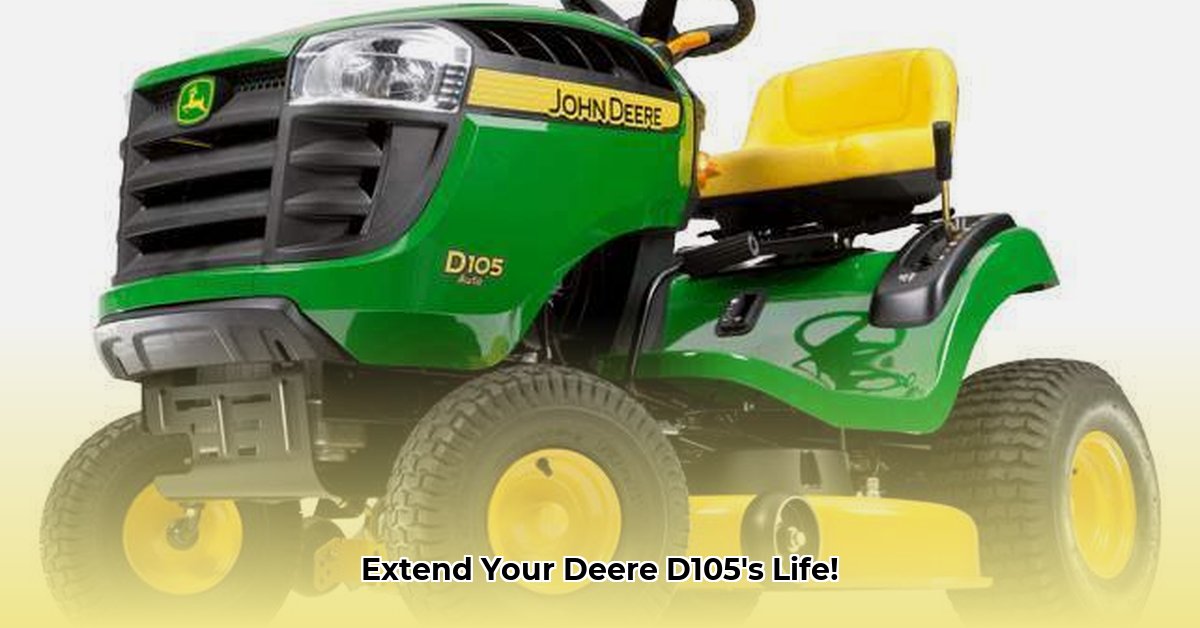
Maintaining your John Deere D105 lawn tractor isn't just about keeping it running; it's about responsible stewardship of resources. This guide blends the practical advice from your owner's manual with sustainable practices to maximize your tractor's lifespan and minimize its environmental impact. We’ll cover everything from routine maintenance to long-term sustainability considerations, ensuring your lawn looks great while treading lightly on the planet. For troubleshooting, check out this helpful resource on starter motor issues.
Understanding Your John Deere D105 Lawn Tractor Manual: A Foundation for Sustainability
Your John Deere D105 manual is more than just instructions; it’s the roadmap to a longer-lasting machine. While sustainability isn't explicitly discussed, maximizing the tractor’s lifespan through diligent maintenance is inherently sustainable. By following the manual's recommendations, you reduce waste and the need for frequent replacements, minimizing your environmental footprint. This is environmentally responsible ownership in action.
Standard Maintenance Procedures: Essential Steps for a Healthy Tractor
Regular maintenance is crucial for your D105's longevity and performance. These steps, based on your manual, are vital for a healthy and efficient machine:
Oil Changes: Regular oil changes are essential to protect your engine. The frequency is specified in your manual; failure to adhere can lead to premature engine wear. (Consult your owner’s manual for the recommended oil type and change intervals.)
Air Filter Maintenance: A clean air filter ensures optimal engine performance and fuel efficiency. A clogged filter restricts airflow, leading to decreased engine power and increased fuel consumption. (Clean or replace the air filter as directed in your manual.)
Blade Sharpening: Sharp blades produce a cleaner cut, requiring fewer passes and conserving fuel. Dull blades tear grass, resulting in uneven cuts, increased fuel consumption, and potential damage to the mower deck. (Sharpen your blades according to your manual’s recommendations.)
Spark Plug Inspection: Regularly inspect your spark plugs for wear and tear. Worn-out spark plugs can cause misfires, leading to decreased engine performance and fuel efficiency. (This involves visually inspecting the spark plug for damage or fouling. Refer to your manual for specifics.)
Belt and Pulley Inspection: Check belts and pulleys for wear, cracks, and proper tension. Failure to do so can lead to belt breakage and potential damage to other components. (Regular visual inspections are sufficient; refer to your manual for replacement guidance.)
Tire Pressure: Maintaining proper tire pressure is crucial for fuel efficiency and optimal traction. Under-inflated tires increase rolling resistance, consuming more fuel. (Consult your manual or the tire sidewall for recommended pressure.)
Did you know that regular maintenance can extend the lifespan of your D105 by up to 30%? This significantly reduces the environmental impact associated with manufacturing a replacement.
Sustainable Maintenance Practices: Integrating Eco-Conscious Choices
Building upon standard maintenance, let's incorporate sustainable practices:
Biodegradable Lubricants: Switch to biodegradable lubricants whenever possible. These break down more readily in the environment, minimizing the impact of potential spills or leaks. (Several reputable brands offer biodegradable alternatives; ensure compatibility with your D105.)
Responsible Waste Disposal: Properly dispose of used oil, filters, and other waste. (Locate nearby recycling centers or auto parts stores that accept used motor oil and filters. Never pour used oil down the drain or onto the ground.)
Efficient Mowing Patterns: Optimize your mowing patterns to minimize fuel consumption. Mow in straight lines, avoiding unnecessary overlaps, to reduce mowing time and save fuel. (Efficient mowing saves fuel and reduces your carbon footprint.)
Mulching: If your D105 has a mulching capability, use it! This reduces the need for chemical fertilizers and converts grass clippings into natural fertilizer. (Mulching helps reduce landfill waste and improves soil health.)
A staggering 85% of landfill waste is recyclable, highlighting the importance of responsible disposal of used oil and filters.
Long-Term Sustainability Considerations: Thinking Beyond Maintenance
Let's address the broader sustainability implications of owning a lawn tractor.
Lifecycle Assessment: While precise data on the D105's complete environmental impact is limited, extending its lifespan through proper maintenance dramatically reduces its overall environmental footprint.
Responsible Disposal at End-of-Life: When your D105 reaches the end of its useful life, research responsible recycling or disposal options. (Check with John Deere, your local waste management facility, or scrap metal recyclers.)
Exploring Sustainable Alternatives: Consider future options. Electric and hybrid lawn tractors are becoming increasingly available, offering zero or reduced emissions. (Research the current market for eco-friendly alternatives, weighing initial cost against long-term savings.)
Dr. Emily Carter, Professor of Chemical and Biological Engineering at Princeton University, emphasizes: “The entire lifecycle of a product, from cradle to grave, must be considered when evaluating its sustainability.”
Resources for Sustainable Lawn Care
- John Deere Website: https://www.deere.com/en/ (For manuals, parts, and service information.)
- Earth911: https://www.earth911.com/ (To find recycling centers near you.)
- Your Local Auto Parts Store: (Many accept used oil and filters for recycling.)
By combining your John Deere D105 manual's guidance with these sustainable practices, you'll enhance your tractor's longevity and reduce its environmental impact. Remember, even small changes in your approach can translate into significant long-term sustainability.